

You step on board and notice it immediately. The synthetic teak deck is not really dirty, but it no longer looks the way you are used to. Dirt remains in the grain, sunscreen leaves marks, and in some areas a light haze appears. Many boat owners then wonder whether they are doing something wrong, or if this is simply part of owning a boat.
In practice, we at Jachtwerk see that it is rarely a matter of effort, but rather uncertainty about the correct approach. Synthetic teak requires a different type of maintenance than natural wood. That difference is often underestimated.
In this guide, you will read how to clean, protect, and maintain a synthetic teak deck, based on manufacturer recommendations and our daily experience with installation and maintenance. We explain what works, what is better avoided, and where a more nuanced approach is needed.
Table of contents
- Cleaning Your Synthetic Teak Deck
- Should you treat a synthetic teak deck?
- How do you protect a synthetic teak deck?
- Can you varnish a synthetic teak deck?
- What does a solid maintenance plan look like?
- Summary: what works in practice?
- What does Jachtwerk recommend?

1. Cleaning Your Synthetic Teak Deck
A synthetic teak deck is durable, but not indestructible. In our daily practice, we regularly see decks that have been damaged by overly aggressive cleaning. This usually happens with the best intentions, yet it does not lead to a better result.
The foundation of proper cleaning is simpler than many people think.
Which cleaning products are suitable?
For regular maintenance, the following is sufficient:
- Fresh water
- A pH-neutral cleaner suitable for synthetic teak
- A soft to medium nylon brush
This combination loosens dirt without affecting the surface. We notice that boat owners who work this way need to use less force and achieve a more even result.
At Jachtwerk, we use only cleaners that are specifically developed for synthetic teak. Not because other products are automatically unsuitable, but because these products react predictably with the material and align with manufacturer recommendations.
Why synthetic teak requires different maintenance than natural teak
Many maintenance problems arise because synthetic teak is treated as if it were wood. Natural teak can withstand intensive sanding and strong cleaning agents. Synthetic teak cannot.
The advantage of synthetic teak is that it retains its color better and does not require oil or varnish. However, this does require controlled and gentle cleaning, without aggressive products.
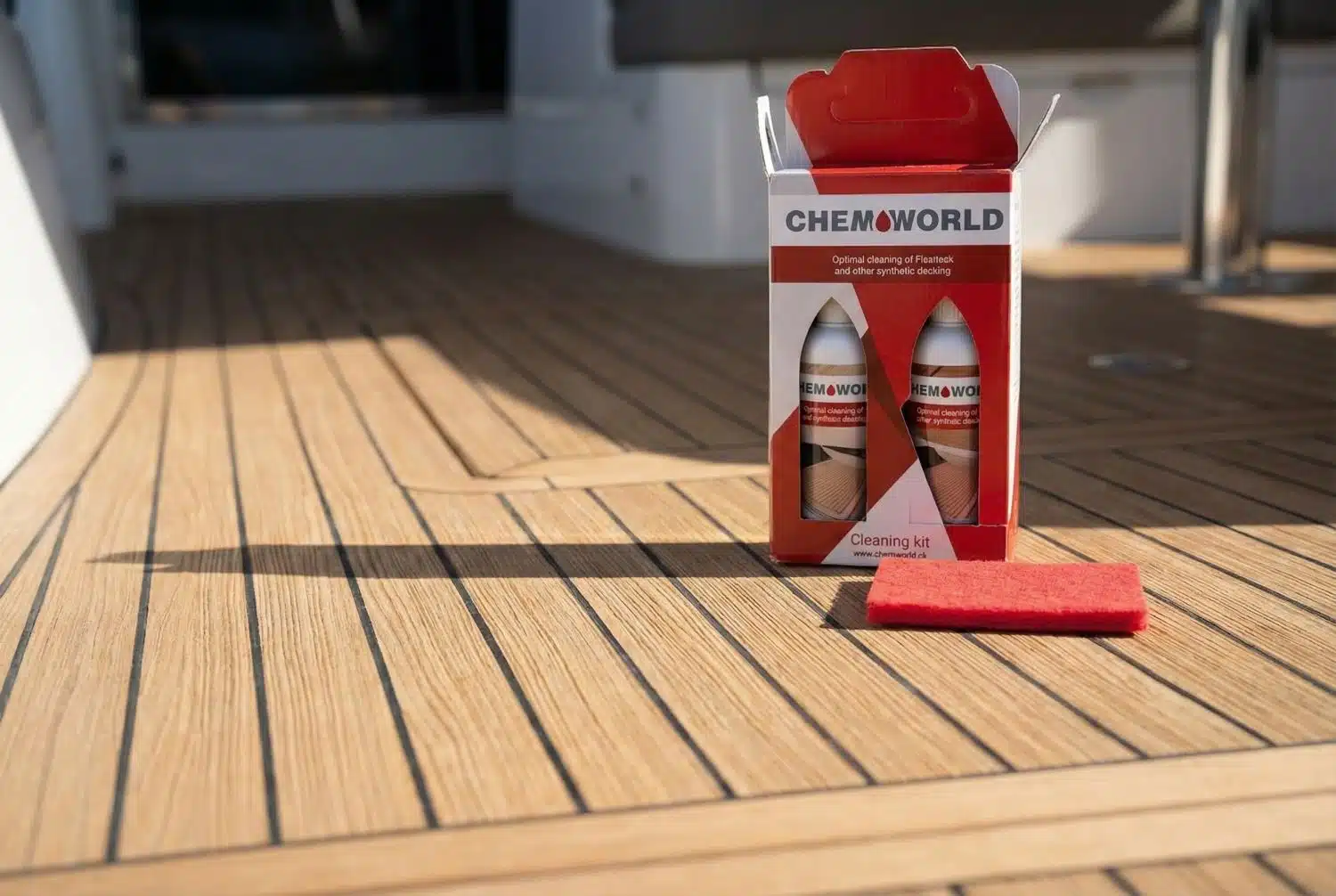
Which cleaner do we use at Jachtwerk?
has been developed for Flexiteek and comparable systems and follows the manufacturer’s recommendations.
The cleaning kit is intended for:
- Regular deck maintenance
- Localised contamination, such as sunscreen stains or fuel residue
How often should you clean a synthetic teak deck?
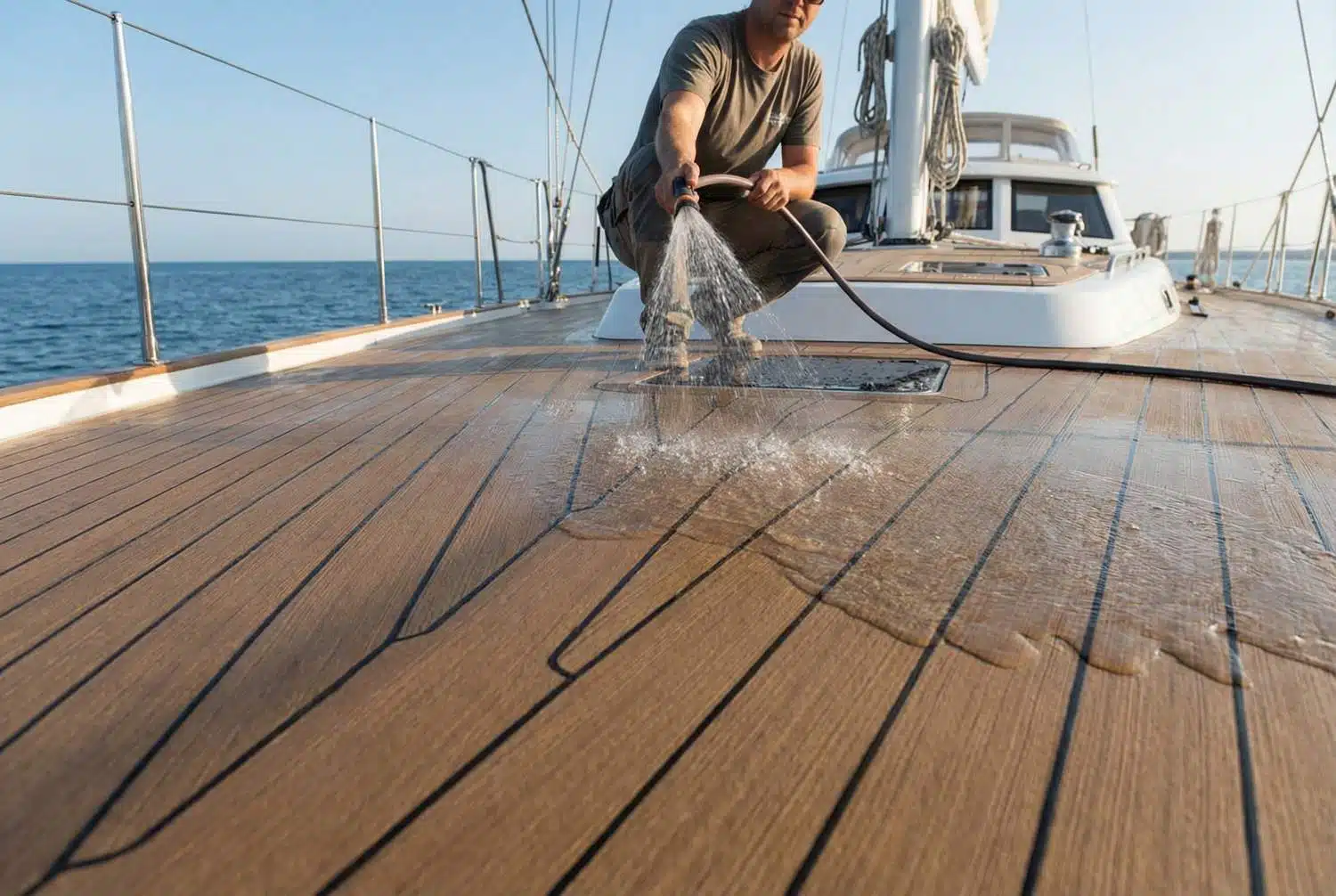
After sailing or intensive use, rinsing with fresh water is usually sufficient. This removes salt and loose dirt before it can dry and settle into the surface.
A thorough cleaning with a suitable cleaner is, in most cases, needed two to four times per season. Cleaning more often does not improve the result and actually increases the risk of wear to the top layer.
How should you approach cleaning, and what should you avoid?
In practice, this is what works:
- Do not clean in direct sunlight
- Wet the deck beforehand
- Allow the cleaner to work briefly
- Brush in the direction of the grain
- Rinse thoroughly
What we strongly advise against:
- Chlorine or bleach
- Acid-based teak cleaners intended for wood
- Steel brushes
- High-pressure cleaning at close range
Most of the damage we encounter can be traced back to the use of these products or methods.
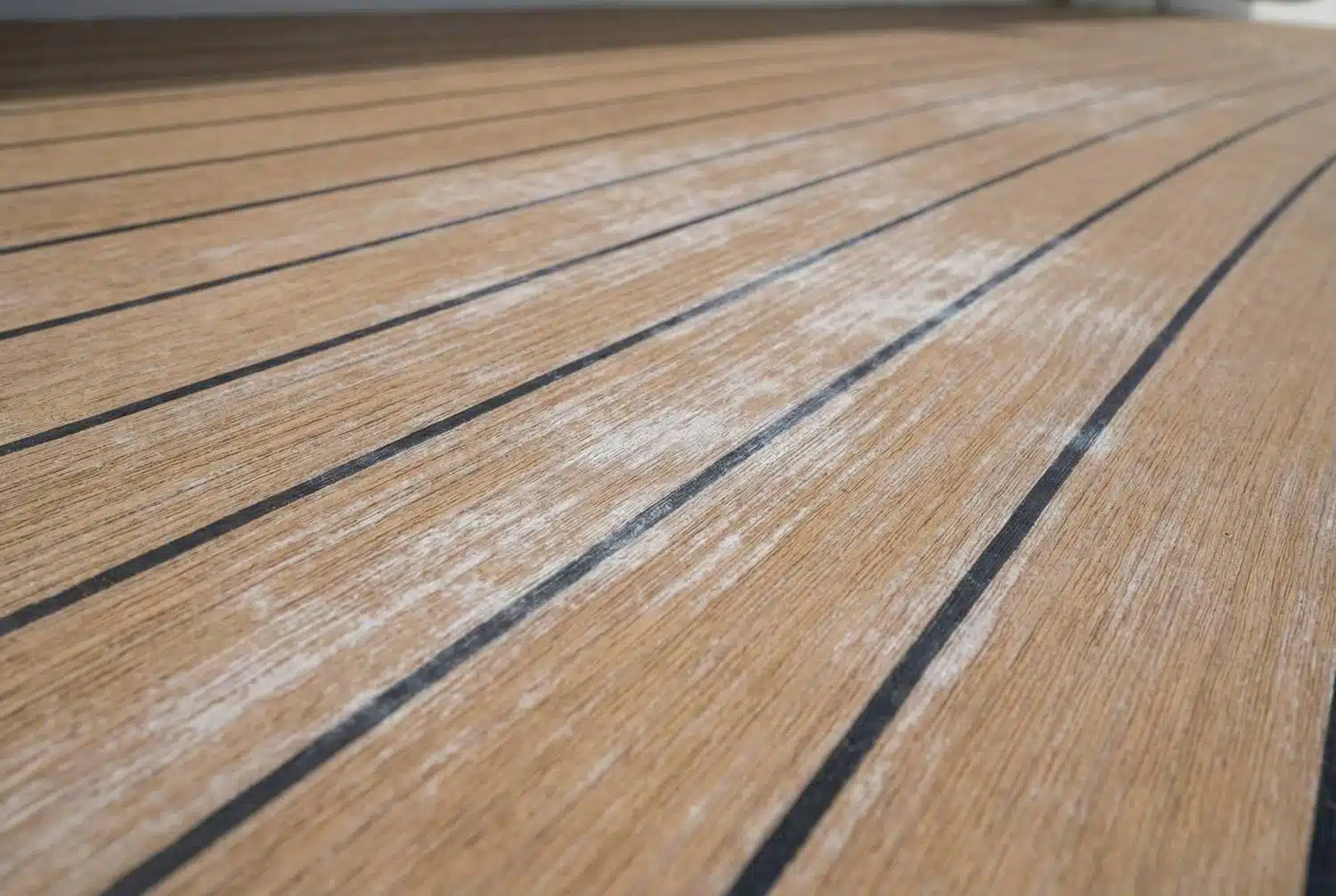
What can you do about white haze on synthetic teak?
White haze is usually caused by limescale, soap residue, or unsuitable cleaning products. Start by cleaning the deck with an appropriate cleaner and rinse thoroughly afterwards.
If the haze remains visible, you can:
- Use a pH-neutral spot cleaner
- Rinse the surface carefully again
Sanding is not a standard solution.
Light manual sanding with grit 60 to 120 should only be considered when cleaning no longer has any effect and the haze is permanent. Always sand in the direction of the grain and limit it to the affected area. For larger surfaces, professional advice is recommended.
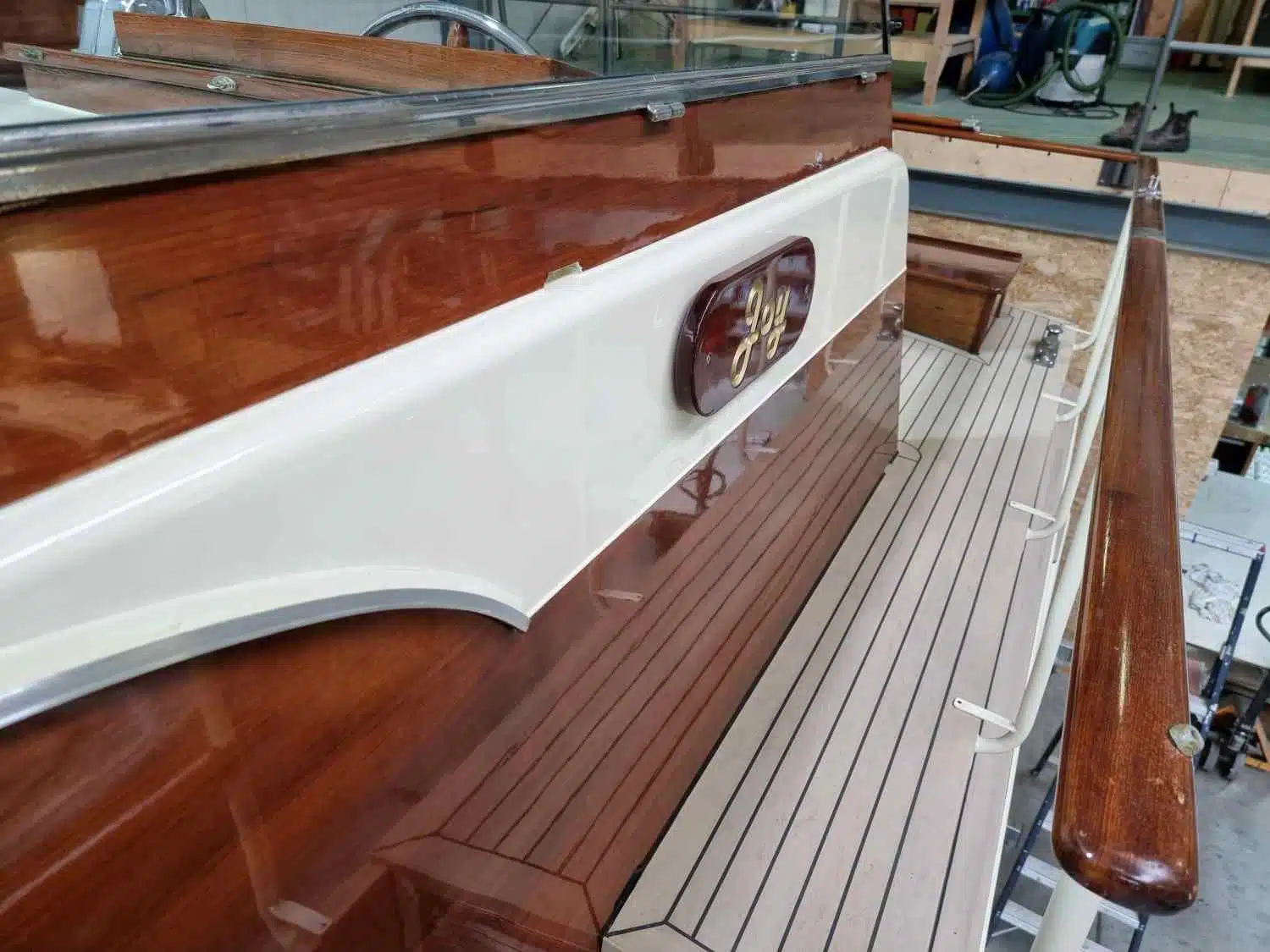
2. Should you treat a synthetic teak deck?
A synthetic teak deck is designed to be used without oil, varnish, or fixed treatments. The material does not absorb moisture and ages differently than wood. In most situations, maintenance consists of keeping the deck clean, not applying treatments.
When should treatment be considered?
Treatment can be an option when:
- The deck has been used intensively for several years
- The top layer responds less effectively to regular cleaning
- Dirt adheres more quickly than before
In our experience, this mainly occurs with decks that are eight to ten years old or older, depending on usage and sun exposure. A deck is not considered old because it is dirty, but because the top layer becomes less active over time.
Which products are suitable?
Only use products that:
- Are suitable for synthetic or PVC teak
- Do not form a sealed or glossy layer
- Do not cause noticeable loss of grip
Always clean the deck first, test the product on an inconspicuous area, and only proceed with treatment if cleaning clearly delivers insufficient results.
3. How do you protect a synthetic teak deck?
Protection mainly means preventing dirt from settling into the surface.
After sailing
- Rinse the deck with fresh water
- Remove salt and loose dirt
In case of contamination
- Remove bird droppings immediately
- Do not allow sunscreen or oil to soak in
In fixed areas
- Place protective caps under chairs and tables
- Do not allow heavy objects to slide across the deck
During periods of inactivity
- Remove leaves and debris
- Prevent dirt from remaining wet for extended periods
These actions take little time, yet they make a clear difference in the long term.
4. Can you varnish a synthetic teak deck?
For exterior decks, the advice is clear: do not varnish.
Varnish creates a sealed layer that does not suit synthetic teak and can lead to slipperiness, peeling, and difficult repairs. For that reason, varnishing is not recommended for outdoor applications.
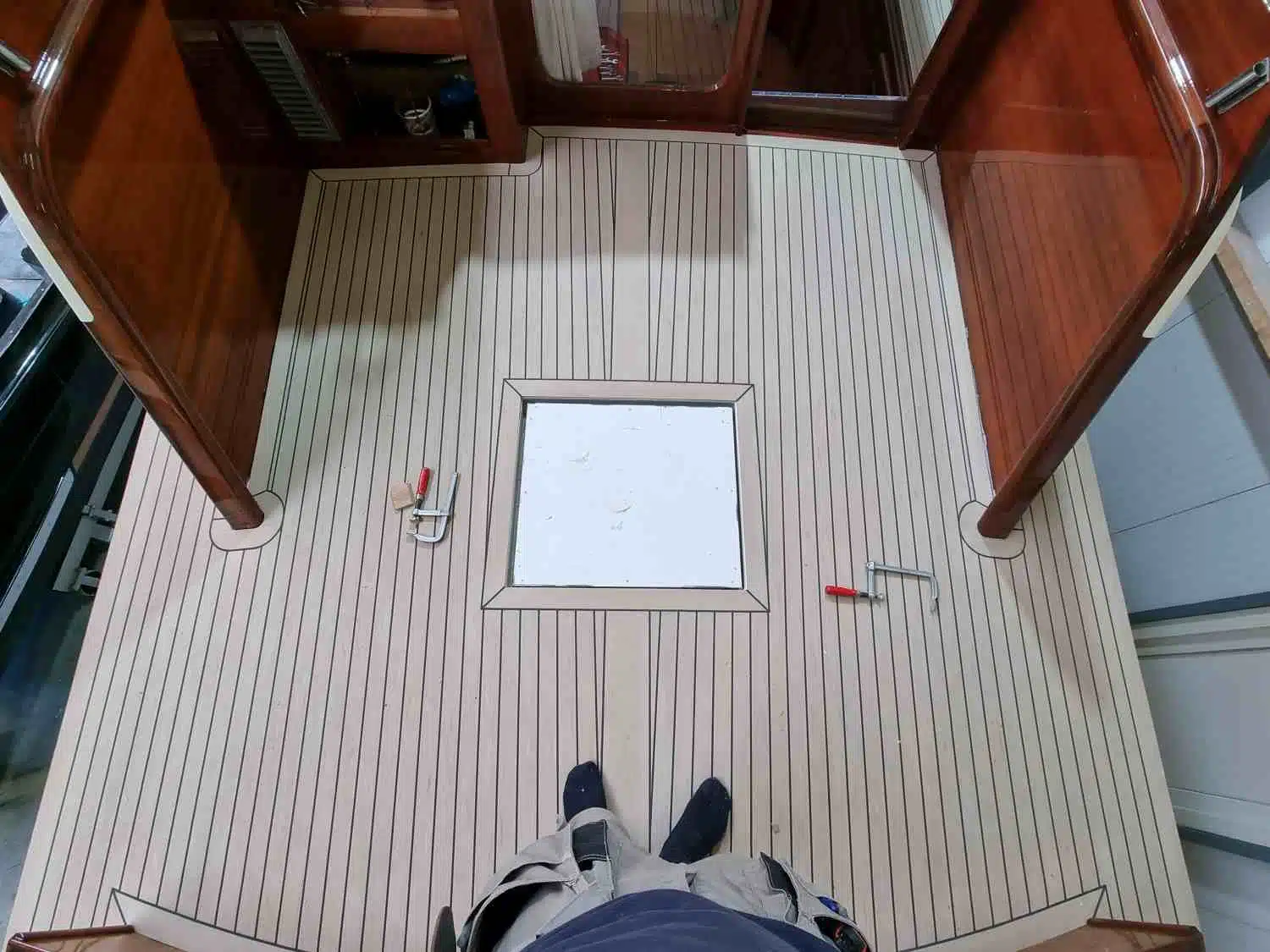
For interior applications, such as a cabin sole, varnish can sometimes be used. This is only appropriate if the manufacturer allows it and if you take reduced grip into account.

5. What does a solid maintenance plan look like?
After use
- Rinse with fresh water
- Remove visible dirt
On a regular basis
- Clean with a suitable cleaner
- Lightly brush in the direction of the grain
Seasonally
- Carry out a thorough cleaning
- Inspect seams and surface condition
When necessary
- Treat local stains promptly
- Perform light manual sanding in case of persistent discoloration
A structured approach like this keeps the deck in strong condition and prevents unnecessary wear over time.

6. Summary: what works in practice?
Proper maintenance consists of four components:
- Rinse after use
- Periodic cleaning
- Local correction
- Only intervene when necessary
What we see in daily practice:
- Damage rarely results from too little maintenance
- Damage often results from using the wrong products and intervening too frequently

7. What does Jachtwerk recommend?
Our advice is based on daily experience with the installation and maintenance of synthetic teak decks.
Keep maintenance clear and manageable:
- Work with products that are suitable for synthetic teak
- Use a fixed cleaning kit
- Do not clean more often than necessary
- Address stains as soon as they appear
- Unsure about the right approach? Pause and ask for advice
Because we design, install, and maintain synthetic teak decks, we see the results of both proper and improper maintenance. We use that experience to give boat owners clear guidance in advance, so you can make informed decisions and avoid preventable damage.